
Recently, I had the opportunity to present at a networking event on a topic that often gets misunderstood: sports psychology.
For many people, sports psychology feels exclusive — something reserved for elite athletes, high-performance environments, or professional sport. But the truth is, the principles of sports psychology apply to all of us, often in the most everyday situations.
At our clinic, this approach plays a huge role in how we support people through pain, injury, and recovery — not by focusing only on symptoms, but by understanding who the patient is behind the pain.
Recovery Is About More Than the Body
In sport, we often see athletes struggle with a fear of movement after injury. Even when tissues are healing well, confidence can lag behind. The body may be ready, but the mind isn’t convinced yet.
This same pattern shows up everywhere:
- Older adults may experience a reduction in balance, leading to a loss of confidence and fear of falling.
- People injured at work may feel anxious about returning, worried about re-injury or coping with job demands.
- Anyone living with pain can begin to associate movement with threat, even when it’s safe.
Pain doesn’t just affect muscles or joints — it affects beliefs, confidence, and behaviour.
Why Progress Is Never a Straight Line
One of the key ideas I shared in my presentation is that progress is not linear.
We often expect recovery to look like steady improvement — each day better than the last. But real life doesn’t work that way.
Progress usually includes:
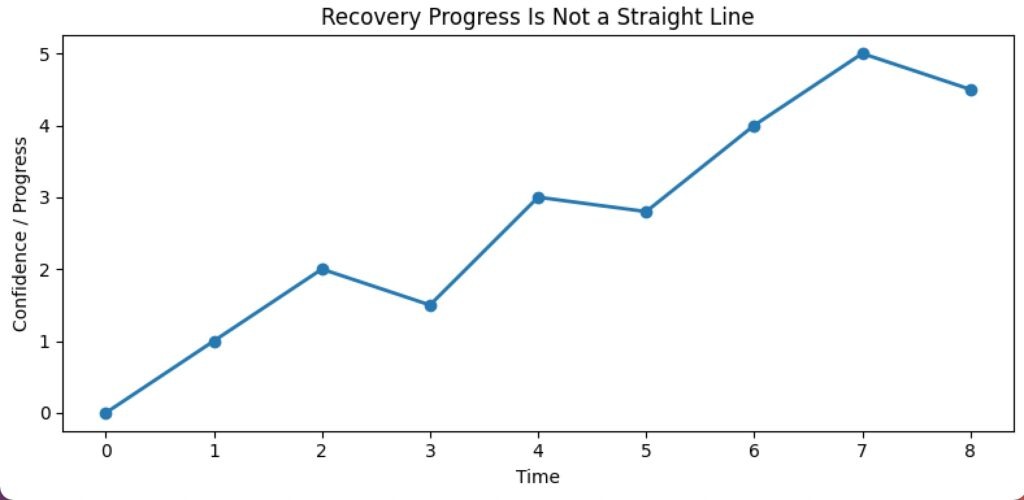
- Ups – days where things feel easier or stronger
- Dips – flare-ups, fear, fatigue, or setbacks
- Plateaus – periods where it feels like nothing is changing
These dips can happen for many reasons:
- Pain flare-ups or physical fatigue
- Fear of re-injury or loss of confidence
- Stress, poor sleep, or reduced support
- Frustration when progress feels slow
Importantly, dips do not mean failure. They are a normal and expected part of recovery.
A Simple Way to Understand Dips: The Wave Metaphor
One of the most helpful ways to explain recovery is to think of it like the tide coming in.
The waves move up and down — sometimes higher, sometimes lower — but over time, the overall water level rises. Each dip doesn’t mean you’re going backwards; it’s simply part of the rhythm.
Recovery works the same way.
When people understand this, fear reduces. Confidence grows. Setbacks feel less catastrophic — and that mindset alone can make a huge difference.
Treating the Person, Not Just the Pain
Our sports therapist uses sports psychology principles every day — not just with athletes, but with people from all walks of life.
This means:
- Looking beyond symptoms
- Understanding fears, beliefs, and goals
- Building confidence alongside physical capacity
- Helping patients trust their bodies again
When we focus only on pain, we miss the bigger picture. When we focus on the person, recovery becomes more meaningful — and more sustainable.
The Takeaway
Sports psychology isn’t about pushing harder or ignoring pain.
It’s about understanding the human experience behind recovery.
Because whether you’re an athlete, an older adult, or someone returning to work after injury, the journey is the same:
Progress isn’t about avoiding setbacks — it’s about continuing the journey.